RESIDENTIAL ELECTRICAL PLANNING
Choosing a service size for a new home is not a contest to buy the largest number. It is a load-planning decision based on the home, the equipment, and how the owner expects to use electricity over time.
What affects service size?
- Electric space heating and water heating
- Air conditioning, heat pumps, and auxiliary heat
- Ranges, dryers, and other major appliances
- EV charging
- Hot tubs, pools, saunas, or detached buildings
- Workshops, welders, compressors, and other large equipment
- Future additions and equipment not installed on day one
Square footage alone does not settle the question. Two homes of the same size can have very different electrical demands.
Where 200 amps may fit
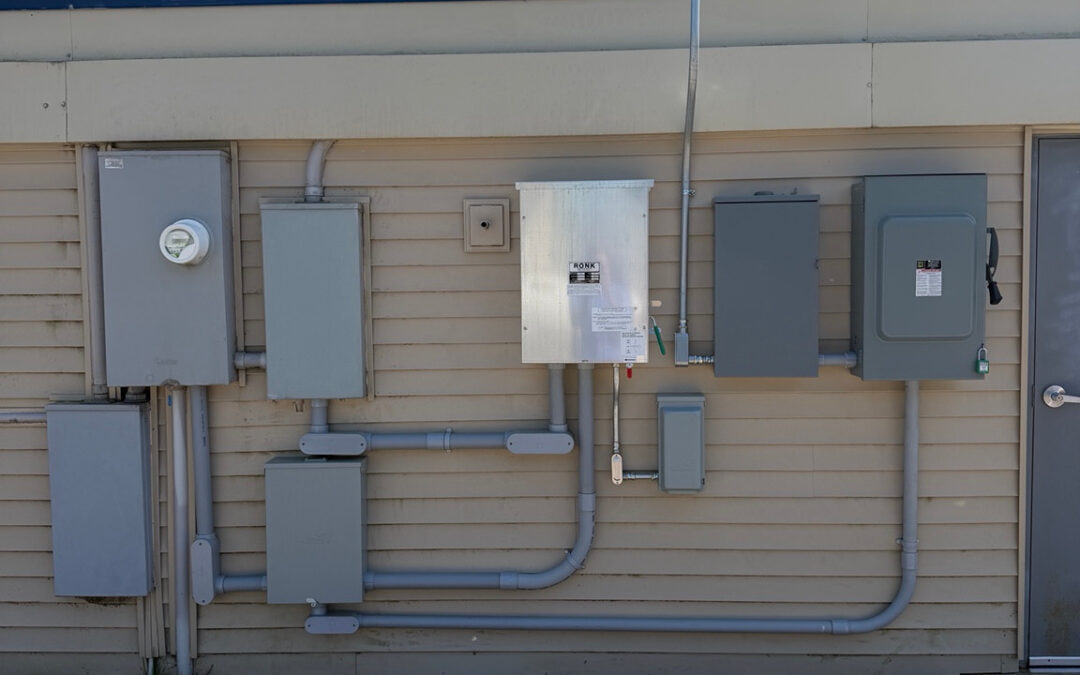
A thoughtfully designed 200-amp service can serve many modern homes. The plan still needs adequate panel space, sensible load management, and room for likely future circuits. Equipment choices matter: an all-electric home with multiple large simultaneous loads may require a different approach than a home using gas for several major loads.
When a larger service deserves consideration
A larger service may be appropriate for a large home, multiple EVs, extensive electric heating, a substantial shop, accessory buildings, or a deliberate all-electric plan. It can reduce future constraints, but it is not automatically available or automatically the best value. Utility equipment, transformer capacity, meter configuration, and project cost must be reviewed.
What solar changes—and what it does not
Solar does not simply “use up” service capacity like a new appliance. Its interconnection has separate code and equipment considerations. Battery systems, backup loads, and transfer equipment add another layer. Planning the electrical and solar sides together can avoid awkward equipment locations and preserve wall space. For more context, see Can Your Electrical Panel Handle Solar?.
Questions to take to your electrician
- What loads are included in the calculation?
- Which future loads should be reserved now?
- How many panel spaces will remain?
- Can load-management equipment solve a specific constraint?
- What does the serving utility allow at this location?
- Where would solar, battery, or generator equipment go?
Size the system around the plan
Lydon Electric & Solar coordinates new-construction service, distribution, and future energy needs. Review our electrical services or share your plans.
Electrical & new construction: 608-269-3013. Solar planning: 608-633-0423.