
FUTURE-READY ELECTRICAL PLANNING
Future-ready planning does not require buying every energy system during construction. It means deciding which options matter, reserving practical space, and avoiding electrical choices that make later work unnecessarily disruptive.
EV charging
Decide how many vehicles may charge, where they will park, how quickly charging is actually needed, and whether loads may be managed. A residential garage, multifamily property, fleet yard, and public parking area require different plans. Conduit, panel capacity, network access, bollards, drainage, and snow-removal patterns may all matter.
Battery storage
A battery plan begins with the loads and duration the owner wants to support. Location, clearances, temperature, communications, fire-safety requirements, and the relationship to solar or utility programs need project-specific review.
Generator planning
Determine whether the goal is a few critical circuits, a larger backed-up panel, or broad building coverage. Fuel, generator placement, sound, exhaust, transfer equipment, service configuration, and maintenance access must be coordinated with the site and other trades.
The critical-load conversation
List what must operate during an outage and what can wait. For a home, that may include refrigeration, well pump, heat, communications, and selected lighting. For a business, it may include life-safety interfaces, refrigeration, servers, process controls, security, or selected production loads.
Plan one coordinated equipment area
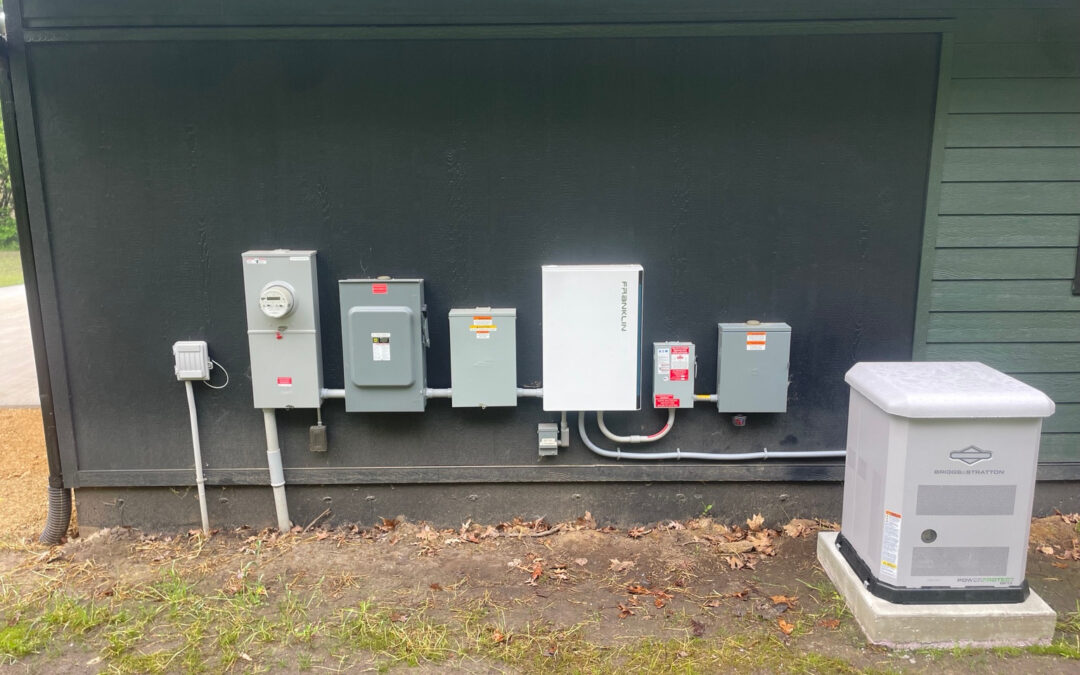
Service equipment, solar interconnection, batteries, transfer equipment, communications hardware, and EV circuits should not be planned independently. A coordinated wall and pathway plan can reduce conflicts and keep required access clear.
For more context, read Will Solar Panels Work During a Power Outage?.
Keep future options practical
See our electrical contracting services or start a planning conversation.
Electrical & new construction: 608-269-3013. Solar planning: 608-633-0423.