

Solar for Schools and Nonprofits in Western Wisconsin
We’re Lydon Electric & Solar, a family electrical shop in Sparta since 1975. We plan and build solar for schools and nonprofits, and for churches too. This page walks your board through how it works and how it gets paid for.
Local grant-funded projects: a school, a church and a library we built each received a solar grant.
Schools and churches send us their friends
Most of our school and church work starts with a phone call between neighbors. First Congregational in La Crosse picked us after they talked to our references. Trinity Lutheran and the Sparta Area School District have both been those references.
So if you want to know what we’re like to work with, ask them. We’ll give you the names.
Here’s what you get with us:
- Electricians first. We check your service, panels and wiring before we design a thing. Surprises there are what blow up a budget.
- No fuzzy math. Your proposal shows the full price. Each grant or rebate sits on its own line.
- Certified. Zach Lydon is NABCEP-certified. That’s a national solar certification, on top of our electrical license.
- Close by. Our shop is on Riley Road in Sparta. When you need us later, we’re down the road.
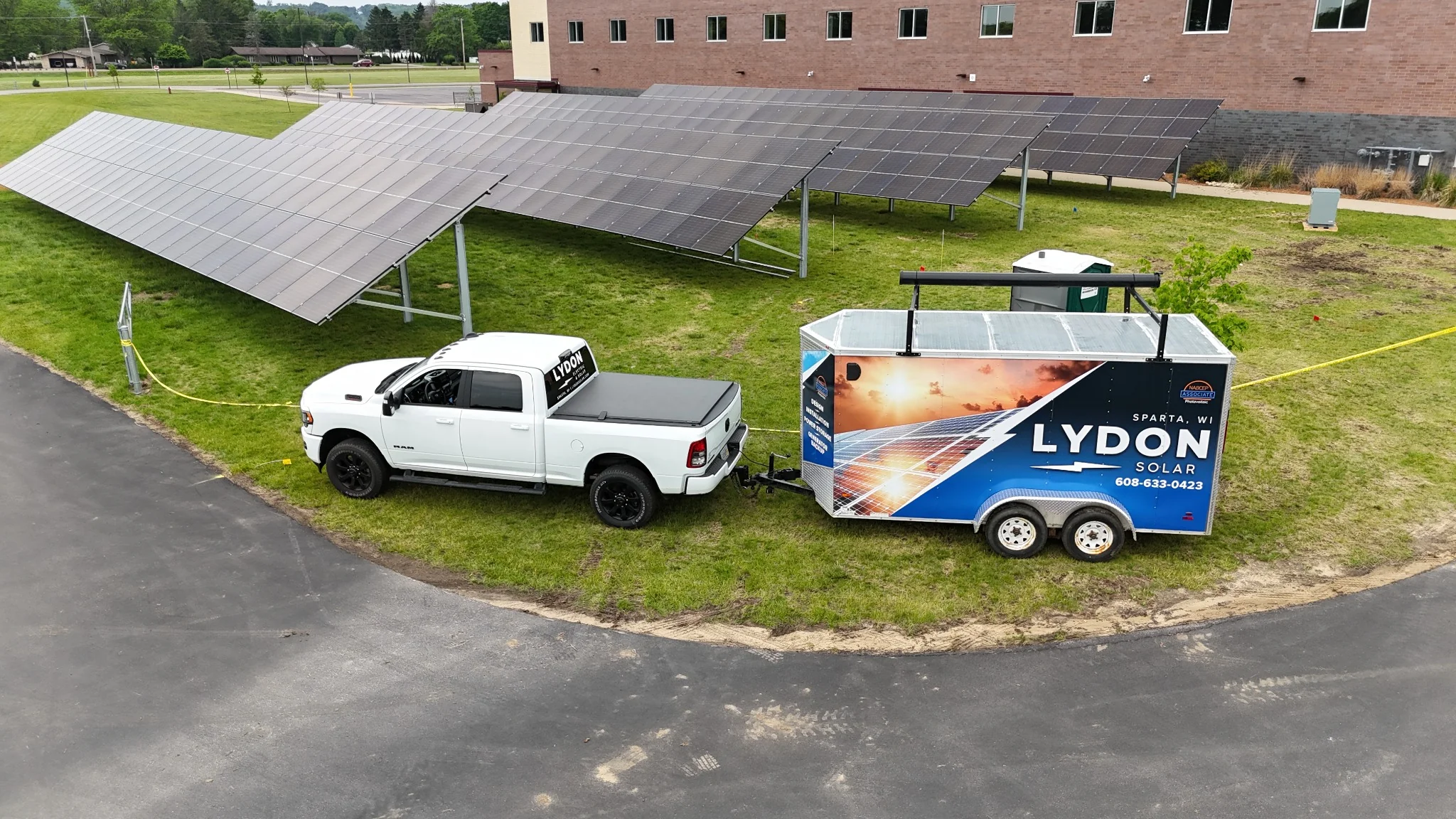
Real projects you can drive by
Each one has its own page with photos and the gear we used.
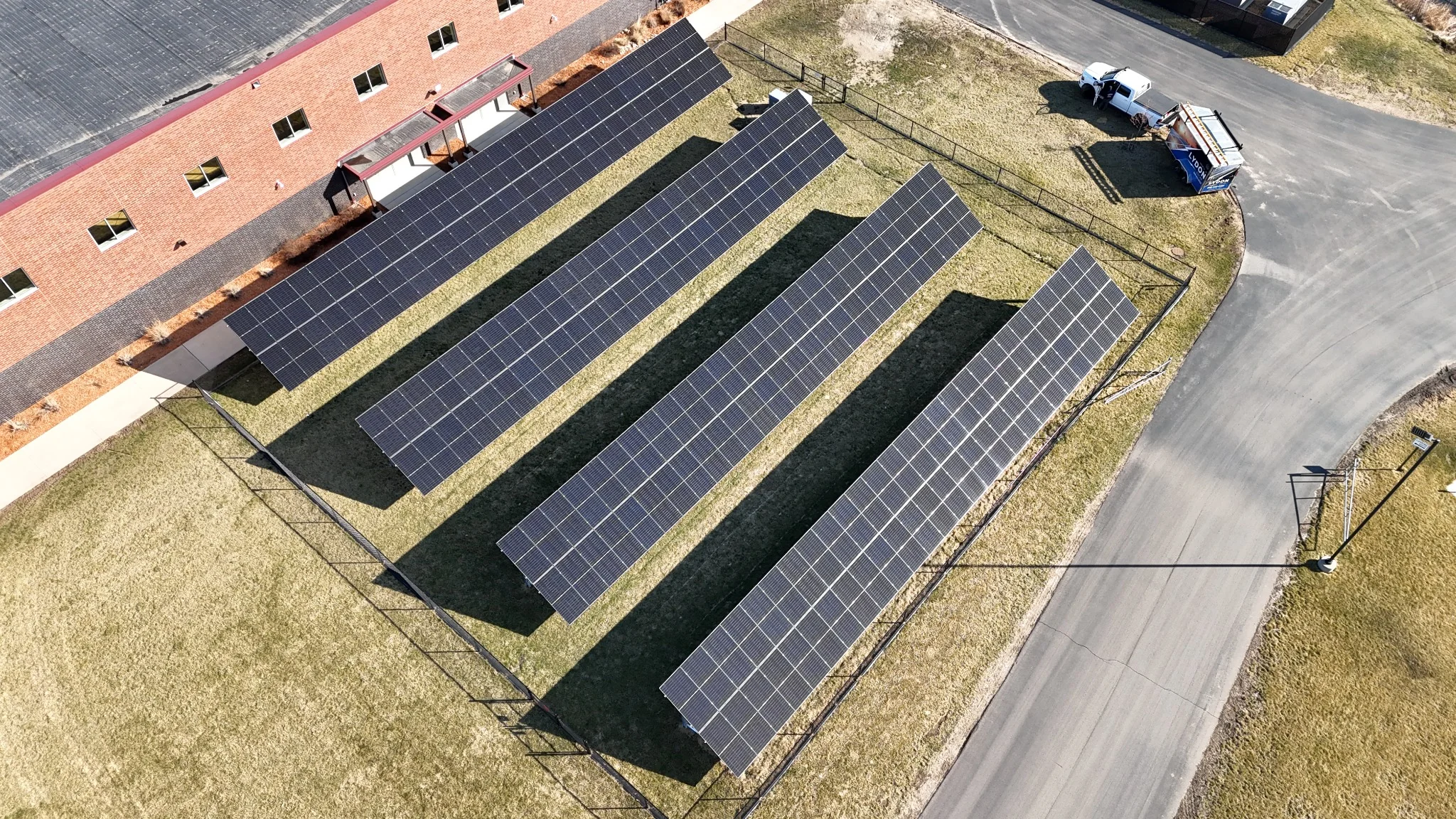
Herrman Elementary
126.44 kW DC · ground mount
Four arrays beside the school for the Sparta Area School District. Later, the school used it for STEMKAMP Community Day.
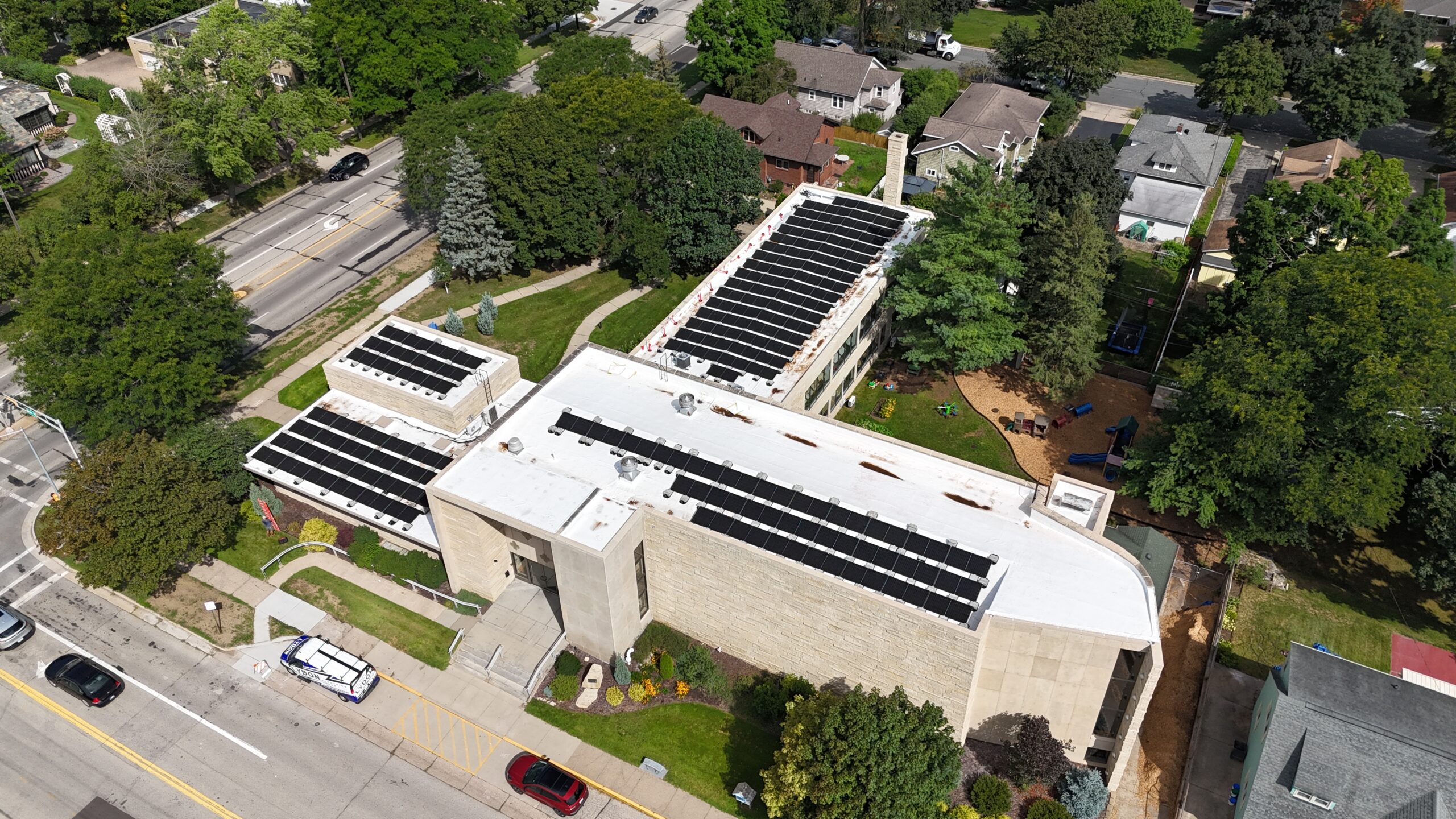
First Congregational, La Crosse
73.66 kW · rooftop
Done October 28, 2026. It’s on Xcel, and the church has a public solar dashboard.
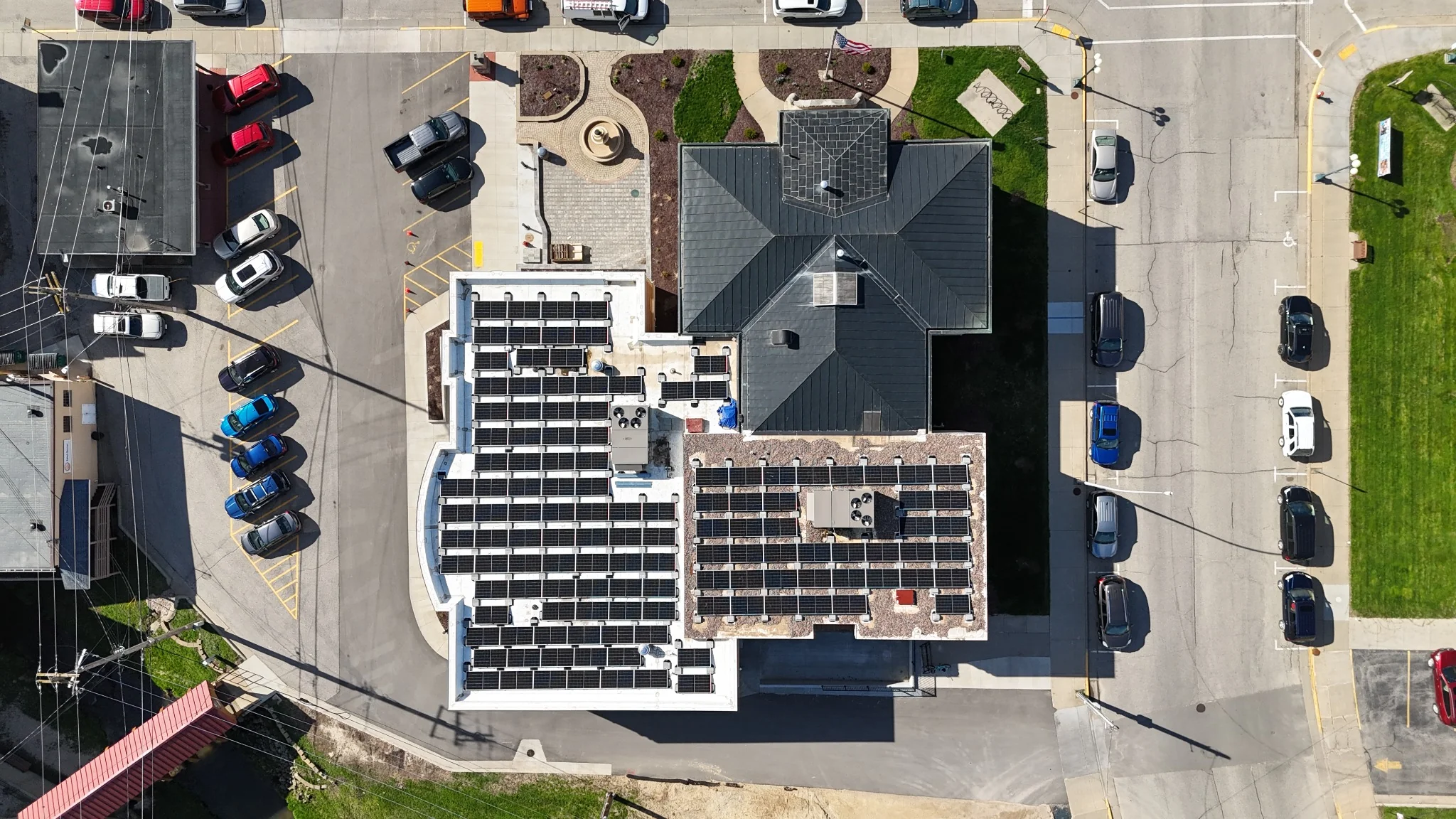
Sparta Free Library
69.85 kW · rooftop
A tricky roof with several levels, right downtown. It has a public dashboard too.
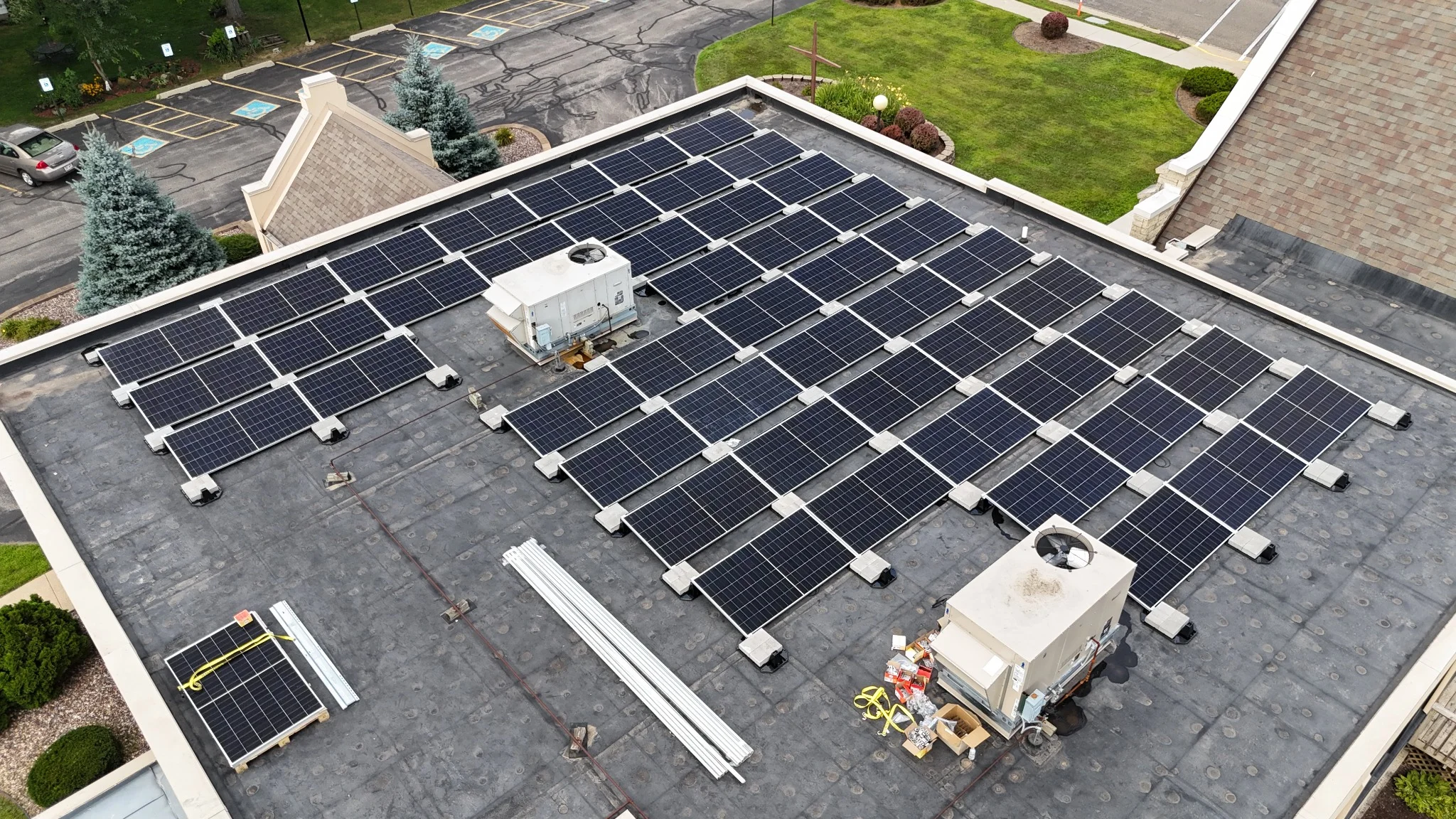
Trinity Lutheran, Sparta
47.8 kW DC · rooftop
Spread over several roof sections. We kept the look of the church in mind the whole way.
Note: kW is the size of the equipment. It isn’t your savings. What a system makes depends on your site and your utility.
How solar for schools and nonprofits gets approved
You don’t buy solar like a homeowner does. For a school, it usually starts with the facilities director and the business manager. For a church or nonprofit, it’s often a building committee. Then a board or council votes. So we plan around your calendar from day one.
It isn’t right for every building. Heavy shade, a roof near the end of its life or a building you might sell soon can all be deal breakers. If that’s you, we’ll tell you before you spend a meeting on it.
Send us your bills
First, grab 12 months of electric bills for each meter. Got more than one building? Tell us which ones.
We walk the site
Next, we look at the roof, any open ground, shade and your electrical service. If the roof needs work soon, you’ll hear it from us first.
You get a board-ready proposal
It shows system size and the full price. The production number is labeled as an estimate. Each incentive gets its own line.
We meet your board
If it helps, we’ll come to the meeting. Then we answer questions in plain English.
Funding in the right order
Solar for Good opens in spring and fall, so we time your proposal for the next window. After the vote, we file the Focus on Energy reservation.
We build it
Finally, we handle permits, the utility and the install. Work happens around classes, services and events.
Want a straight answer first?
The Fit Check is free. Send the basics, and we’ll tell you if a full proposal is worth your board’s time.
How schools, churches and nonprofits pay for solar
Most projects mix a few sources. No single one pays for the whole system. Here’s what we check on every job, based on the rules as of November 2026.
First Congregational in La Crosse and the Sparta Free Library each received a 2026 Solar for Good grant. Herrman Elementary received a 2025 Solar on Schools grant (MREA’s program, now part of RENEW’s Solar for Good). We built all three. Churches and nonprofits need a RENEW Wisconsin member as their installer for Solar for Good. We’re an active member. (Public schools and other municipal buildings don’t need a member installer.)
Focus on Energy
Wisconsin’s program gives solar rebates to eligible business and nonprofit customers. Your utility has to take part, and the meter has to be on a non-residential rate. We’re a Focus on Energy Trade Ally. See current amounts on our grants and incentives page.
Solar for Good
RENEW Wisconsin gives these grants to nonprofits, public schools and houses of worship. Size limits and rules can change by round. So we check them before we design. See the current round on RENEW’s Solar for Good page.
Budgets and donors
The rest usually comes from savings, a capital budget, financing or donors. Some groups put a live solar display in the lobby. That way, donors can see what they paid for.
Questions we get from boards and finance committees
Will a grant cover the whole cost?
No. Grants and rebates cover part of a project. That’s why your proposal shows the full price. Then each incentive sits on its own line. So your board can see what’s locked in and what still needs an application.
How does a Solar for Good grant work?
First, you get a proposal from your installer. Then you apply to RENEW Wisconsin while a window is open. If you’re picked, RENEW holds the grant while you raise the rest and build. The project has to be done within a year. The money comes after the utility hooks up the system. You also agree to share your project, like an open house. A public solar dashboard makes that part easy.
How long does a project take?
Plan on about 3 to 6 months. The utility hookup, parts and permits set the pace more than the build does. So if you’re aiming for a grant window, start talking to us early.
What about our roof?
If your roof needs replacing in the next several years, do that first. It’s usually cheaper. Got open land? Then a ground mount might work, like the one at Herrman Elementary.
Will the work get in the way of classes or services?
Not much. Most of the work happens outside. We plan the short power shutoff around your calendar.
Will solar keep the lights on in an outage?
Not by itself. Backup takes a battery or a generator set up for it. Does your building serve as a warming center or shelter? Then tell us early, and we’ll plan for it.
Does it matter which utility we have?
Yes, a lot. Your utility sets the hookup rules and what you’re paid for extra power. It also decides whether you can use Focus on Energy. Some utilities run their own programs too. Around here that’s often Xcel Energy, a co-op like Oakdale Electric, or a city utility. We confirm yours by address before we design anything.
Solar for churches
Old roofs, donors and council votes come with their own questions. Here’s our page on solar for churches in western Wisconsin.
Where we work
Our shop is in Sparta. We also work in Tomah, La Crosse and around Monroe, Vernon and Juneau counties. Running a business? See commercial solar.
Let’s see if solar makes sense for your building
Start with the free Fit Check. Tell us it’s for a school, church or nonprofit. Or just call me. I’m happy to talk it through.
Electrical or new construction? Call the shop at 608-269-3013.