
Commercial buyer’s guide
A commercial solar proposal should make the project easier to evaluate—not hide the important decisions behind one savings number.
Commercial proposals vary widely. The strongest ones connect the physical design, electrical scope, utility process, schedule, equipment, warranties and financial assumptions. If a decision-maker cannot identify what is included and what remains uncertain, the proposal is not ready for a fair comparison.
1. Site and system design
- DC system size and expected AC output
- Panel count, manufacturer and model
- Inverter type, quantity and model
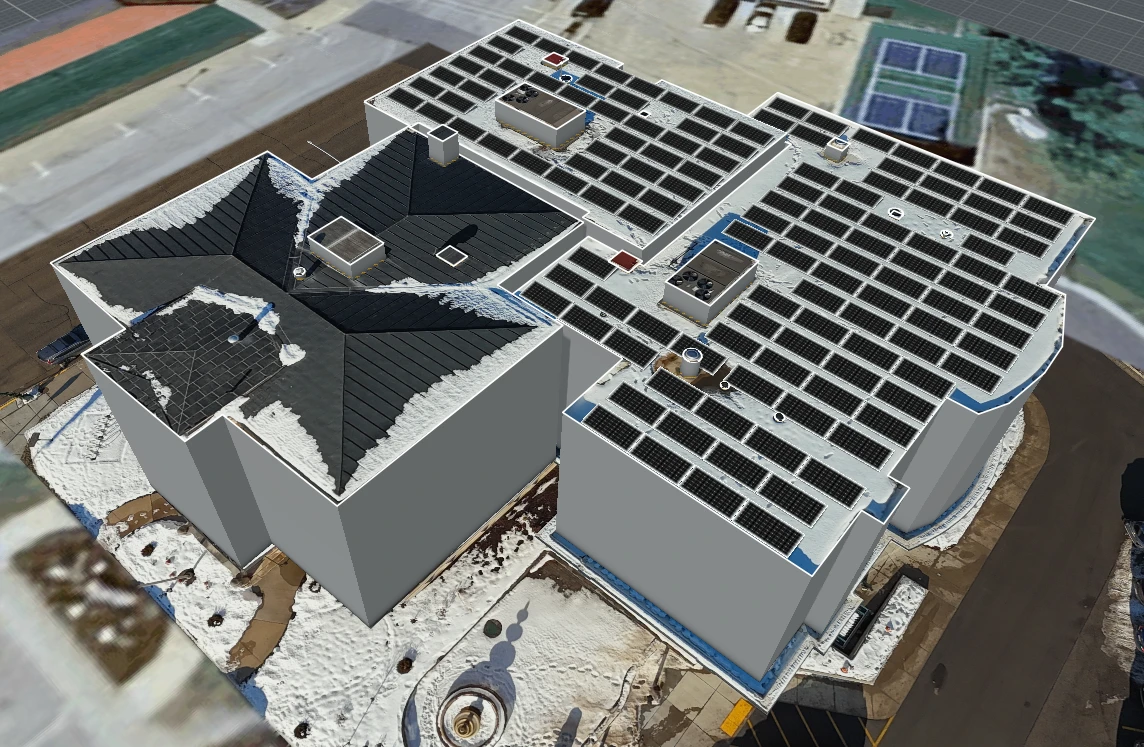
- Roof, ground-mount or canopy layout
- Orientation, tilt, shade and access assumptions
- Preliminary equipment and wiring locations
2. Production estimate
The proposal should identify annual production, modeling inputs, assumed losses and degradation. Ask whether the model uses site-specific shade, actual array geometry and the selected equipment. Production should be presented as an estimate, not a guarantee unless the proposal defines an actual contractual guarantee.
3. Electrical and utility scope
- Point of interconnection and service voltage
- Included switchgear, transformers or protective equipment
- Utility application and study responsibilities
- Metering, disconnect and witness-test requirements
- Known upgrade allowances and exclusions
For larger facilities, utility requirements can materially affect cost and schedule. The proposal should state what is known and what remains subject to utility review.
4. Structural and civil work
Identify responsibility for structural review, roof warranty coordination, geotechnical information, foundations, trenching, pavement restoration, drainage and landscaping. For low-slope roofs, clarify the racking method and any attachment or ballast assumptions.
5. Project responsibilities
| Item | Proposal should identify |
|---|---|
| Engineering and permits | Who prepares, submits and pays |
| Utility process | Who manages applications, studies and testing |
| Roof/civil work | Included work, allowances and exclusions |
| Commissioning | Testing, documentation and owner training |
6. Price, payment and change conditions
Look for a clear base price, alternates, allowances, payment milestones and circumstances that can change the price. Avoid comparing proposals until sales tax treatment, utility costs, roofing work, service upgrades and other major items are treated consistently.
7. Financial assumptions
Review electricity rates, escalation, incentives, tax treatment, financing, maintenance and residual utility charges. Current tax and incentive eligibility should be confirmed by qualified advisors and official program sources before the organization relies on it.
Pair the proposal with the commercial electric bill guide and the commercial feasibility checklist.
8. Warranties, monitoring and closeout
Document equipment warranties, workmanship coverage, monitoring ownership, communications, service response and what records the owner receives. Closeout should include drawings, datasheets, test results, warranties, utility approvals and operating instructions.
Bottom line
A good commercial proposal makes uncertainty visible. It gives the owner enough information to compare scope, test assumptions and understand what must happen before the system can operate.
Compare the whole project
Lydon Electric & Solar develops commercial proposals around the facility, electrical service and utility process—not a generic panel count.
Last reviewed October 30, 2026. Final requirements depend on engineering, permitting and utility review.